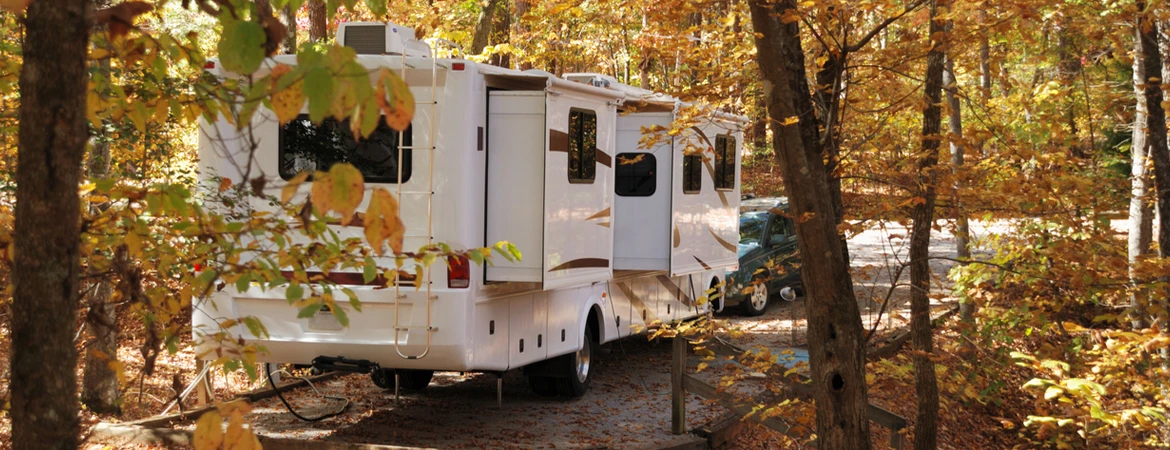
If you own an RV, you know that winter storage isn’t just a seasonal chore, it’s how you protect your investment and make sure your spring travels get off to a smooth start. Canada’s cold weather can be tough on things like the plumbing, tires, and batteries, so taking the time now can help prevent costly repairs when spring rolls around.
Your recreational vehicle could be a motorized or a towable trailer. At belairdirect, we insure the towable kind like travel trailers, fifth-wheels, and tent-trailers, so while this guide focuses mainly on them, our practical storage tips can certainly apply to motorhomes too.
Few things damage an RV faster than frozen water lines. Even a small amount of water left behind can expand, crack pipes, or damage tanks once the temperatures drop. Here’s what to do:
- Start by draining the fresh, grey, and black water tanks completely, then rinse them to prevent buildup and odours.
- Once the tanks are empty, switch off the water heater, let it cool, and drain it as well.
- If your RV has a bypass valve for the water heater, turn it to the winter setting so you don’t waste antifreeze filling the tank.
- The next step is clearing the water lines. Opening the low-point drains beneath the RV helps remove most of the remaining water, and briefly running the water pump pushes out whatever’s left in the system.
- Remove any water filters for the season so antifreeze doesn’t run through them.
- Once everything is drained, it’s time for RV-approved, non-toxic antifreeze. Running the faucets one by one until you see the pink solution ensures the entire system is protected.
- Don’t forget the toilet, shower, and sink traps too!
A fresh, dry interior makes spring opening much easier. Get prepped with this simple checklist:
- Remove all food and perishables, including sealed pantry items to prevent pests.
- Give the inside a thorough clean, defrost the fridge, and wipe down surfaces so no moisture gets trapped. Many RV owners also use moisture absorbers or a small dehumidifier to help prevent mould over the winter.
- Keep cupboard doors and interior spaces open to promote airflow and keeps the whole RV smelling better.
Next, follow these steps for the outside:
- Give the exterior a good wash to help protect your RV’s finish from dirt and road residue that can cause deterioration. Adding a coat of wax creates an extra barrier against winter moisture.
- Inspect the seals around windows, vents, doors, and slide-outs. If you notice cracks or worn areas, repair them before storing the vehicle.
- Covering your RV is also important. A breathable RV-specific cover keeps out snow and debris without trapping in moisture, which is something tarps can do. If your RV is stored outdoors, this small step can make a big difference.
If you own a motorized RV, winter storage includes a few extra steps for your engine. Adding fuel stabilizer helps prevent the gas from breaking down over time, and topping up fluids like coolant and oil can help protect the engine from corrosion while it sits. Be sure to run the engine briefly after adding the stabilizer to circulate everything properly.
Whether your RV is motorized or towable, good tire care is essential. Inflate them to the manufacturer’s recommended pressure before storing the vehicle, especially if it’ll stay parked for several months. UV-resistant tire covers help protect the rubber from cracking from winter sun exposure. And if you’re able to, moving the RV slightly every month or so can help avoid flat spots.
Batteries also need attention. Disconnecting them prevents slow electrical drain, and storing them in a warmer indoor space prolongs their lifespan. Giving the battery a charge every so often over the winter keeps it ready for spring.
The other kind of protection for your RV is, of course, insurance. RV insurance varies depending on whether your RV is towable or motorized.
At belairdirect, we offer coverage for towable RVs with our RV Comfort Plan which includes protection against accidental physical damage, theft, vandalism, fire, and certain weather-related losses. Since towable RVs rely on the towing vehicle for movement, liability coverage comes from your auto insurance policy.
The RV Comfort Plan also includes up to $7,500 for personal property, coverage for permanently installed accessories, emergency roadside assistance, towing and repatriation, and additional living expenses if your RV can’t be used following a covered loss. This coverage is available to you in PEI, New Brunswick, Nova Scotia, Quebec, and Newfoundland.
Motorhomes must be insured with a standard auto insurance policy because they’re motor vehicles. At belairdirect, our motorized RV coverage isn’t available in Alberta, Ontario, or Atlantic Canada, and in Quebec, motorized RVs still require a dedicated auto policy, with optional coverage for contents, roadside assistance, equipment, and more.
If you’re storing your RV for the winter, it’s important to know what coverage applies while the vehicle is parked. Some owners assume they can pause coverage during the off-season, but damage can still occur, especially from theft, fire, vandalism, or weather-related events.
Getting the right protection is simple. Start by contacting your insurer and asking about the options available for your type of RV. Provide plenty of details about where and how the RV will be stored, since your location can affect your coverage needs.
Costs vary widely based on your RV’s value, the type of coverage you choose, and the province you live in. Comparing quotes also helps you choose a plan that fits your budget and gives you the confidence that your RV is protected all year.
Preparing your RV for winter might take a bit of effort now, but it can save you time, money, and stress when spring arrives! And with the right insurance, you can store your RV confidently knowing it’s protected through the coldest months of the year.
Reach out for a quote or compare your options online. Insurance is important, and it shouldn’t be complicated, so we’re here to help you keep things simple.
Yes. Risks like theft, fire, and weather damage exist year-round, even when your RV isn’t on the road.
Yes, as long as you use a breathable cover, protect your tires, and store it on level ground. Some municipalities have specific rules, so check your local bylaws.
It may, depending on the type of coverage you have and whether the damage was sudden and accidental.



