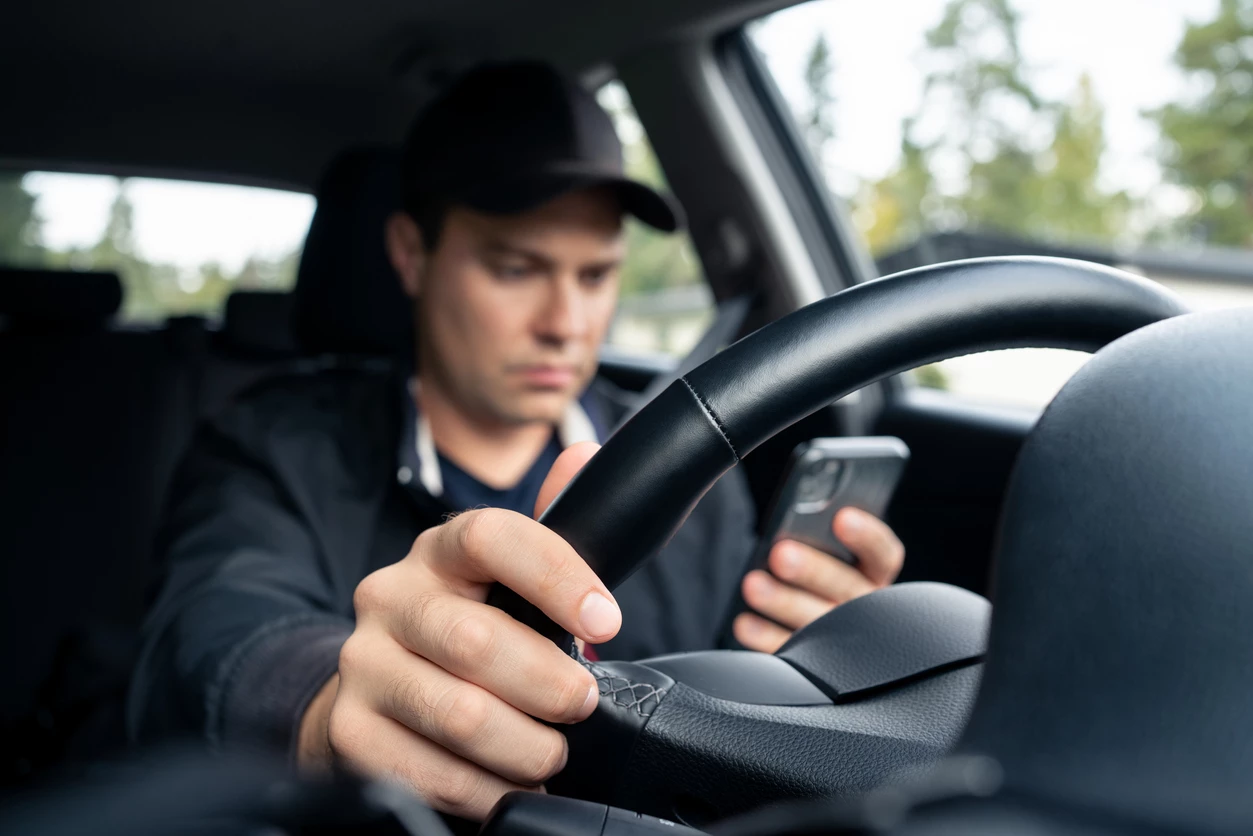
A distracted driving ticket can cost you thousands of dollars over time.
You might face fines ranging from several hundred to over $1,000 for a first offense, depending on the province. Add in demerit points and possible license suspensions, and you’ll see an increase in your insurance premiums. These can often increase by 25% or more, and in some cases, even over 100%.
If distraction leads to a collision, you’ll also deal with deductibles, legal fees, lost wages, and medical bills, which can all add up quickly.
Distracted driving is any activity that takes your focus off driving, and it comes in three main types:
- Visual distractions: This is when you take your eyes off the road. Examples include checking a text message, looking at your GPS, or glancing at something happening outside your car.
- Manual distractions: This happens when your hands are not on the wheel. Eating, adjusting the radio, or holding a phone are common activities that fall into this category.
- Cognitive distractions: This is when your mind isn’t fully focused on driving. It might happen when you’re lost in thought, stressed, or having an intense conversation with a passenger.
Here’s how you might get caught for distracted driving:
- Spotted by a police officer: Officers can pull you over if they see you using your phone or engaging in any distracting activity. This leads to tickets and possibly demerit points.
- After an accident: If a crash happens, investigators may use phone records or witness statements to determine if distraction was a factor, which can lead to serious consequences.
- Caught on camera: In areas with traffic cameras, you could get a ticket in the mail if you're captured using your phone while driving.
- Reported by other drivers: Sometimes, other drivers report seeing distracted driving, adding to the data that informs police patrols and safety campaigns.
Knowing these types of distractions can help you stay focused on driving.
Distracted driving is increasing because our cars and phones are packed with technology that can easily steal our attention. Modern vehicles come with large touchscreens and complex systems that can be distracting.
At the same time, the constant buzz of our smartphones makes it tempting to check messages and notifications. Despite knowing the risks and stricter laws in place, many of us think we can handle multitasking. This overconfidence leads to more accidents on the road.
In some parts of Canada, more people are now dying from this kind of distraction than from impaired driving. Let's keep our focus where it belongs, on the road.
Here’s how a distracted driving ticket can impact you right away in different provinces:
| Province | Fines (first offense) | Demerit points (first offense) | Additional notes |
|---|---|---|---|
| Ontario | Up to $1,000 | 3 points | Repeat offenses can lead to more points and suspensions. |
| Alberta | $300 | 3 points | Consistent penalties for repeat offenses. |
| Quebec | $300 to $600 | 3 to 5 points | Fines and points increase for repeat offenses. |
| British Columbia | $368 | 4 points | Extra penalties if you repeat the offense. |
| Manitoba | $672 | 5 points | Higher fines and points for repeat offenses. |
These are general guidelines, so remember that actual fines and demerit points might vary depending on the situation and any updates to local laws. It's always a good idea to check the current regulations for the most accurate info.
One of the trickiest parts about distracted driving is how it can impact your car insurance.
Here’s why that matters:
- When you get caught for distracted driving, your insurance company may see you as a bigger risk. This often means your premiums will likely go up, sometimes by 25% or more. In some cases, especially if it happens again, your rates might even double, making it much more expensive to keep your insurance.
- These higher premiums don’t just vanish quickly. A distracted driving conviction can affect your insurance rates for several years, usually sticking around for 3 to 6 years depending on where you live and your insurer. Plus, if you had any safe-driver discounts, you might lose them, which means paying even more each year.
- Distracted driving is considered a major offense, which means even a single ticket can classify you as "high-risk." This can lead to non-renewal of your current policy, forcing you to seek insurance through high-risk or facility markets. You might also lose safe-driver or loyalty discounts and find it difficult to bundle home and auto insurance, making it even costlier. So, while the fines and demerit points are tough, the long-term impact on your insurance can be even harder on your wallet.
If being distracted leads to an accident, there are a few more things you might have to deal with:
- Deductibles and repairs: Fixing your car can get pricey, with deductible costs ranging from $500 to $2,000 or more.
- Lost wages and transportation: If you get injured or face a license suspension, it could affect your income and add extra commuting costs.
- Medical and rehabilitation costs: Even if you have insurance, those medical bills and rehab expenses can add up fast.
- Legal exposure: In the event of lawsuits, you'll likely face the stress and time commitment of ongoing litigation, regardless of the legal costs being covered by your insurance. The process can be lengthy and emotionally taxing, impacting your daily life.
We've all felt that itch to check our phones while driving, but it's important to keep your focus on the road. Now that you know what counts as distraction, here are a few quick ways to avoid it:
- Prepare before you go: Set your GPS, music, and mirrors so you're not adjusting things on the move.
- Use "Do Not Disturb": Turn this on to silent notifications and reduce temptation.
- Stash your phone: Keep it out of reach to avoid the urge to glance at it.
- Snack wisely: Pull over for a quick bite rather than eating while driving.
- Simplify your dashboard use: Get familiar with controls while parked, so they're easy to use when you're on the road.
- Enlist your passengers: Let them handle navigation and tunes when possible.
- Clear your mind: Take a deep breath and focus on driving before setting out.
Keeping your focus where it belongs helps make the road safer for everyone.
Distracted driving isn't just about fines and higher insurance premiums; it could also cost someone their life. By keeping your focus on the road and minimizing distractions, you make the roads safer for everyone. Be safe and drive attentively.