If you've ever been involved in a car accident, you know it can be an overwhelming experience. The best way to handle it is to stay calm and be familiar the steps you need to take to resolve the situation. Knowing what to do can help protect your safety, your rights, and your peace of mind! Read on as we walk you through the actions you should take, from gathering the right information to dealing with your insurance provider.
Above all else, your safety and that of your passengers should be your top priority! Let's review the key safety measures to take, how to assess the situation, and how to seek the right help.
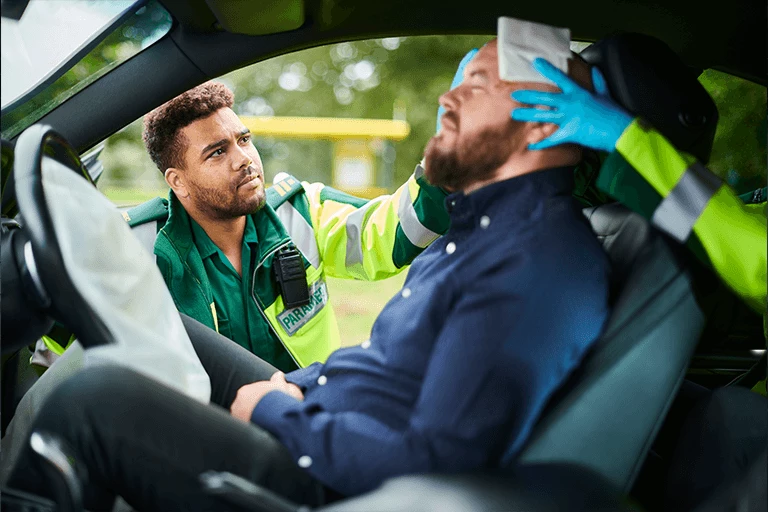
If the car accident was more severe than a minor fender bender, the first step is to check for any pain, discomfort, or injuries. If you are seriously injured, do not move! Moving could make your injuries worse. Instead, wait for emergency services to arrive. If there are any witnesses or pedestrians nearby, ask them to check on you or stay with you, and in the meantime, try your best to remain calm and still.
Once you've ensured your own safety, check on the well-being of your passengers. If someone appears hurt, seek medical attention as soon as possible. If there are young children, avoid removing them from their car seats unless it's absolutely necessary. Keeping people in the vehicle, especially kids, can be the safest option until help arrives. Again, count on help from bystanders if you need support in ensuring everyone’s safety.
Beyond checking for injuries, there are several important safety measures to follow right after the accident:
Knowing when to call 911 is essential. If the accident is significant, you should call the police, especially if there are injuries, significant damage, or legal requirements to report the incident. Involving them ensures proper documentation of the incident and the scene. A police report can be important for insurance claims or legal matters.
If your vehicle is still operable, you can try to move it to the side of the road, away from traffic, and always turn on your hazard lights to alert other drivers. If you can't move it, use road flares (if you have them!) to warn others of the accident. These steps help reduce the risk of further accidents by creating a clear, safe area around the scene.
Once you're sure that your vehicle is visible to others, focus on getting yourself and your passengers to a safe location if staying in the car isn't a wise option. Remember, people should only get out of the car if they're not seriously injured! If you and your passengers are safe to move to the side of the road, try to stay behind a guard rail or on the sidewalk. If the vehicle can't be safely moved, leave it where it is and focus on finding a safe place to wait.
Once you're in a safe spot, wait for emergency service personnel to arrive. This might include the police, fire trucks, an ambulance, or tow services, depending on your situation.
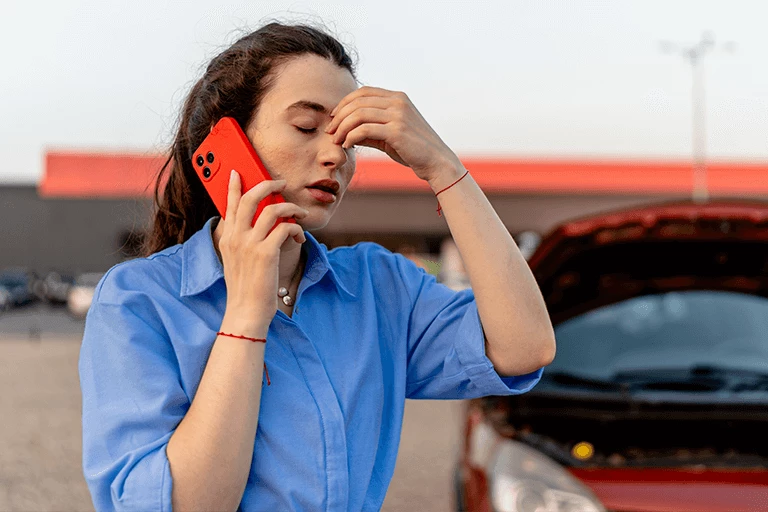
In Canada, laws surrounding car accidents vary by province, so it’s important to evaluate the situation and phone the right authorities. For instance, accidents in Ontario, British Columbia, and Alberta have different reporting requirements. Accidents causing damages over $2,000, those involving injuries, or any signs of impaired driving should be reported by calling 911.
In Quebec, accidents involving injuries, fatalities, or if there is suspicion of impaired driving, must of course be reported to the police immediately. For minor accidents, drivers typically complete a joint report form (constat amiable) without police involvement.
You should notify your insurance company of the accident as soon as possible. Quick reporting is crucial to ensure that all relevant details are accurately recorded. Be sure to include the police report in , if you have one. Here are 3 simple steps to follow:
- Record the details of the accident: Accurate documentation is key to processing any accident claim. Record important info such as the date, time, weather conditions, road conditions, your estimated speed at the time of the accident, and a timeline of the events. Drawing a diagram of the accident can also provide a helpful visual for insurance and legal purposes.
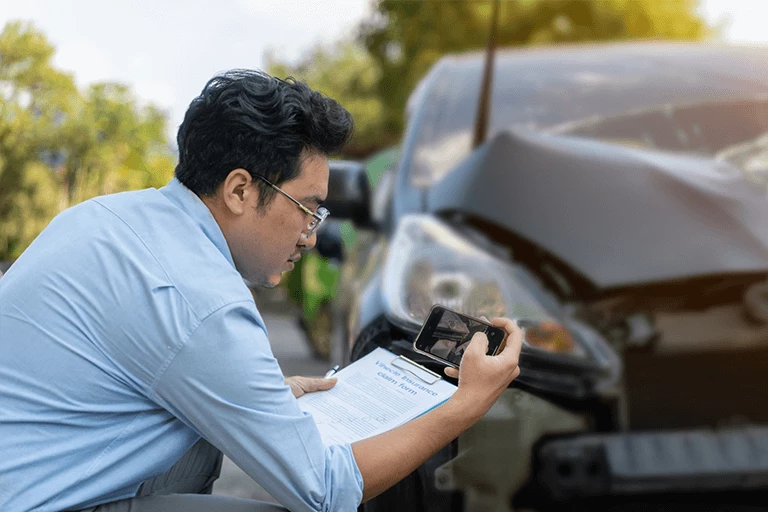
- Take photos: It’s very important to document the accident scene with photos. Take pictures of the damage to all vehicles involved from multiple angles. Be sure to capture the surrounding area, as well as any injuries. Don’t forget to get photos of important items like license plates, insurance documents, and the police report.
- Exchange insurance information (if applicable): After the accident, you’ll need to exchange insurance information with the other driver. Collect their full name, contact information, insurance company, and policy number. Also note their driver’s license and license plate number. This process ensures that both parties have the necessary information for future claims.
- Bring your vehicle to a Service Centre: You can simply drop off your drivable and repairable vehicle and drive off with the rental car we've prepared for you. Our is there to manage your car repair and make your claim experience simpler, faster and more convenient.
Once you're ready to report the accident to your insurance company, you'll be asked to provide your car insurance policy number, details about the accident, and information on the drivers involved. Be sure to include any relevant injury or damage information as well.
In the case of a minor accidents (where damages are under $2,000 and there are no injuries), you'll need to follow all of the steps above, and also check if there are any special requirements in your province. For example, Ontario has specific requirements for reporting these incidents, like visiting a collision reporting centre. In any case, it’s still important to document the scene, even if the damage appears minor. Additionally, be cautious to avoid collision towing and repair scams, as unscrupulous operators can inflate vehicle damage estimates and contribute to insurance fraud.
Even if your injuries don't appear to be too severe, it’s a good idea to check in with a physician after the accident. Common injuries like whiplash may not be felt immediately, but a medical check-up is a necessary precaution to ensure that you're safe and healthy.
There are some common questions that come up after a car accident. So, for your assurance and peace of mind, we'll cover some here:
Several factors determine whether your insurance rates will increase after an accident. These factors include who was at fault, the amount of damage, and whether there were injuries. Some provinces offer policies that can help prevent a rate increase.
If you are involved in an accident that is not your fault, gather all the information outlined above from the other driver and work with your insurance company to determine the fault. Ontario, Quebec, Manitoba, and Saskatchewan offer no-fault insurance, which simplifies this process by allowing each party to deal with their own insurance. British Columbia, Alberta, and some other provinces use a tort-based system (fault-based), while some offer modified versions with aspects of no-fault coverage for medical benefits or specific circumstances.
The specific rules and coverage types vary between provinces, so be sure to check with your insurance provider for clarity if you need it!
Even in cases where there is no visible damage, it’s still important to follow up with the other driver to exchange information and document the incident for future reference. You never know if you might need it down the line!
Never accept guilt at the scene of an accident. Even if you believe you are at fault, accepting guilt can have legal consequences. It’s better to let insurance companies and the authorities determine who is at fault.
The timeframe to claim an injury varies by province. In Canada, you generally have 7 days to report a car accident injury to your insurer and up to 2 years to file a lawsuit. To support your claim, you’ll need medical reports, accident details, insurance forms, and receipts for expenses. Keep detailed records of your injury, treatments, and related costs, and consider legal advice if your claim is denied or if you pursue further action within the time limit.
Unfortunately, sometimes accidents happen that we are unaware of until we see the damage, like a hit and run, for example. Maybe your vehicle is in a parking spot, and someone hits it without you knowing. In the event of a hit and run, be sure to file a police report and contact your insurance provider to check if your coverage includes uninsured motorist protection or collision coverage. They will guide you through the claim process.
Knowing what to do after an accident can help minimize your stress and ensure everyone’s safety. By following these steps, you can protect your rights and simplify the process for insurance claims and legal matters.
- Stop your vehicle: Leaving the scene of an accident is subject to criminal investigation.
- Check for injuries: If someone is injured, call 911.
- Get off the road: If it is safe to do so, get out of your car and get to safety onto the shoulder.
- Call the necessary authorities: Either the police or our and towing service.
- Wait for help: You can even start to take pictures and videos to document the accident.
- Get medical attention: Better safe than sorry!
- Submit a claim: Make your claim directly on the belairdirect app.
- Always be prepared: Always keep an accident worksheet inside your car.